- Run properly, a senior executive's LinkedIn profile should bring in 3 to 5 meetings a month with the right people.
- The profile carries the executive's name, but marketing or an outside team runs it, respectfully and professionally.
- The executive's part is small: a short monthly conversation, approving content and taking the meetings.
- Every meeting goes into the CRM with an owner and a next step, so the sales team can follow up.
When I tell a managing partner or founder that their LinkedIn profile should be bringing in business, I usually get polite hesitation.
They don't doubt that LinkedIn works. They doubt it should involve them. It's their name, their reputation and their diary, and none of those feel like things to hand over lightly.
I understand that. I also think it's why so many senior profiles sit there doing nothing.
3 to 5 meetings a month, or it's a wasted channel
Think about what a senior profile already has. Years of connections, a title that opens doors, and a name people in your market recognise.
Most firms would pay a lot to build that from scratch. Yet in most firms it produces nothing you could measure.
The standard I'd hold it to is simple. A senior executive's profile, run properly, should bring in 3 to 5 meetings a month with the right people. If it brings in none, the channel is there and nobody is using it.
Your name, but not your job
The profile carries your name, but what goes out through it is the firm's thought leadership: your experience, your view of the market and the problems you see clients struggle with. You're the most credible person to say it, so it goes out under your name.
That doesn't mean you write it, post it or chase the replies yourself.
The profile is a conduit. Your marketing team, or an outside team, runs it on your behalf, respectfully and professionally, the way they'd handle anything else that carries the firm's reputation.
In practice your part is small:
- A short conversation each month about what's on your mind
- Approving content before it goes out
- Taking the meetings that come through
Done well, it adds very little to your week.
The worries I hear most
These come up in nearly every first conversation I have with a senior executive. They're fair questions, so here are straight answers.
"I don't have time"
You don't need much. The team runs the outreach and brings you in when there's a real conversation to have.
"I don't like being in the limelight"
You don't need to become an influencer. The aim is to come across as calm, senior and credible, the way you would in a client meeting.
"We value confidentiality"
Nothing goes out without your approval, and every message is checked by a human before it sends. You stay in control of what's said in your name.
"I close deals face to face"
LinkedIn doesn't replace the meeting. It helps you book more of them. If you travel for work, it can fill your diary before you land.
We answer a few more of these on our homepage.
Where the meetings go
A meeting that comes through LinkedIn is the start of the sales process, not the end of it.
A fortnight ago I wrote about why professional services firms aren't built to sell. The same point applies here. Every conversation from the profile should go into the CRM, with an owner and an agreed next step.
From there, the sales team follows up, keeps in touch with the people who aren't ready yet, and moves the rest towards a proposal. That's how a profile adds to the pipeline instead of producing a pleasant chat that goes nowhere.
Check your own profile
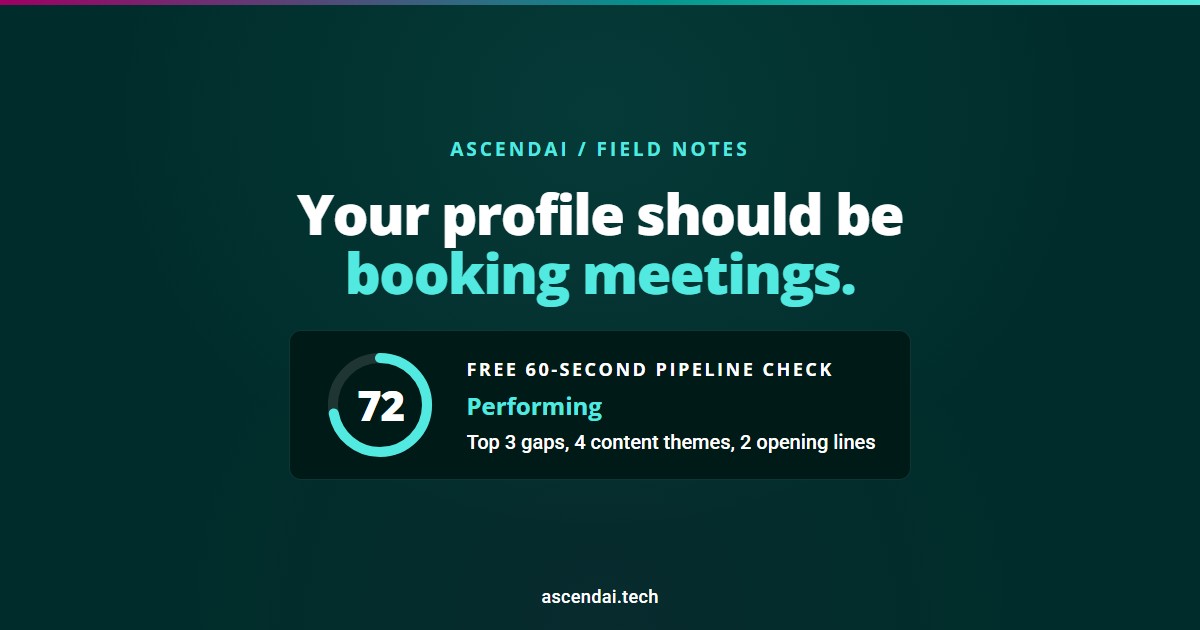
Our Pipeline Check is free. Paste the public link to your LinkedIn profile, and in about 60 seconds you get:
- A Pipeline Health Score out of 100
- Your top 3 gaps, each with a fix
- 4 content themes based on how you position yourself
- 2 opening lines you could post this week
There's no login, no password and no email. We only read what's already public.
It uses the same framework we use for client firms, so it's a fair picture of how we'd look at yours. Run it on your own profile, or on the senior person at your firm whose profile should be doing more.
Originally published in Sean Winter's newsletter.
Where does your profile stand? The Pipeline Check scores your profile and recent posts against the framework we use for client firms, in about 60 seconds.
Run the free Pipeline Check →Frequently asked questions
How many meetings should a senior executive's LinkedIn profile produce?
Run properly, 3 to 5 meetings a month with the right people. If a senior profile brings in none, the channel is there and nobody is using it.
Does the executive have to write and post the content themselves?
No. The profile is a conduit. A marketing team or an outside team runs it on the executive's behalf. The executive has a short conversation each month, approves content before it goes out and takes the meetings that come through.
What is the AscendAI Pipeline Check?
A free check that reads a public LinkedIn profile in about 60 seconds. It returns a Pipeline Health Score out of 100, the top 3 gaps with a fix for each, 4 content themes and 2 opening lines. There is no login, no password and no email.

Sean Winter
Sean is a CFA charterholder with 20+ years in finance and professional services. He founded AscendAI to turn executive LinkedIn profiles into a predictable pipeline of C-suite meetings for professional and financial services firms across EMEA.