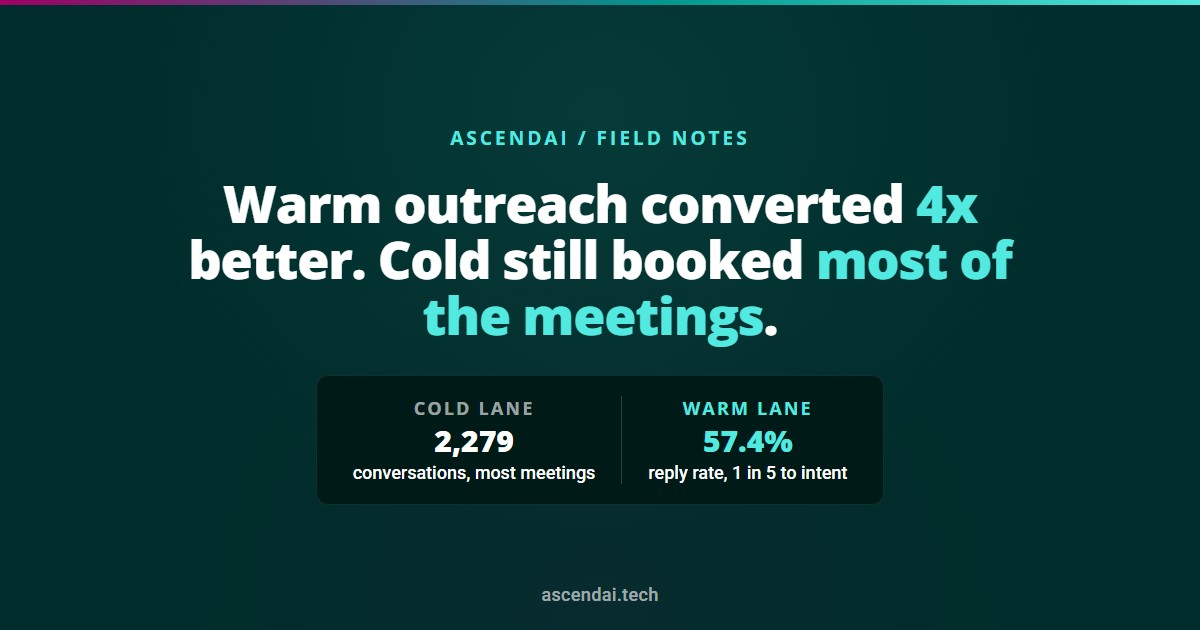
- We tracked 2,279 cold conversations and 141 warm ones through to the only outcome that pays - a booked meeting - with every reply classified by a human.
- Warm conversations replied at 57.4 percent, roughly four times the cold rate, and more than one in five reached meeting intent.
- But cold ran at many times the volume, and the majority of meetings in our sample still came from cold.
- Cold is the volume lane, warm is the conversion lane. The winning system runs both, and recognition lifts both.
Two weeks ago I wrote about what happened when we tracked our own LinkedIn messages through to meetings, rather than stopping at the reply. The response to that piece told me we'd hit something, so we kept going.
The analysis has since grown into a proper study. 2,279 cold conversations, every one started by a senior person, every one followed through to the only outcome that pays, and every reply classified by a human rather than a sentiment model. Across the sample, the system has now booked 53 meetings and counting.
One comparison in the data sits underneath everything else we found.
The two lanes told different stories
Alongside the cold outreach, we tracked 141 conversations that began warm. Warm meaning the other person had engaged with the sender in some way before any message was sent. They'd commented on a post, followed them, downloaded something. Their first contact with the sender was not the DM.
One honest note before the numbers. This is a sample, 141 warm conversations from our own campaigns set against a much larger cold group, and it's observational data rather than a controlled experiment. It shows what happened for our senders, not a law of nature.
The warm conversations replied at 57.4 percent, roughly four times the cold rate, and more than one in five reached meeting intent. Per message sent, nothing cold came close.
But the volume ran the other way. You can only start warm conversations with people who already know you, and there were 141 of them against a cold set many times that size. Count the meetings rather than the rates, and the majority in our sample still came from cold.
What each lane is for
Cold is the volume lane. It works, and in our data it carried most of the funnel. But it only pays under two conditions, and the study is blunt about both. The leads have to be genuinely qualified, and the message has to earn its place. A specific, verifiable observation about their world. Exactly one question. A confident close instead of a polite one. One early follow-up. Its conversion rate will always be lower than warm, and that's not failure. It's the price of reaching people who don't know you yet.
Warm is the conversion lane. Four times the reply rate and far higher meeting intent, from a fraction of the throughput. And you can't scale it by deciding to. The pool of people who recognise you grows through months of visible thinking, not through a bigger list.
The system is both
The firms that get this right don't pick a side. They run cold to fill the funnel this quarter, and they build the warm layer so that a growing share of their market half knows them before any message lands. It's the same conclusion we reached about whether LinkedIn works for professional services firms - the channel pays when it's run as a system, not a tactic.
The warm layer also pays twice. Recognition doesn't just create warm conversations, it lifts cold response too, because a name that rings a bell turns a message from an interruption into a continuation. The message is the last step of the system, not the system.
That's the business we're in, so you'd expect me to say this. Fair. But we ran the numbers on our own outreach and that's what came back, whether it flattered us or not.
What's in the full study
The full study covers the cold side properly, because most outreach still starts cold and the folklore around it deserved testing:
- Five pieces of standard outreach advice, each tested against the full funnel, several of them inverted by the data
- The anatomy of the messages that actually produced meetings, part by part
- A scorecard for grading your own team's last ten DMs against the data
Every figure quotes its sample size, and the caveats are printed rather than hidden. The full study is free on our DM study page. Subscribers to our newsletter get it first.
The bottom line
Run both lanes, and judge them differently. Cold gets judged on the quality of the list and the discipline of the message. Warm gets judged on whether your visibility is growing the pool of people who already recognise you. Neither number makes sense held to the other lane's standard.
Want an honest read on your own outreach? We'll look at how your firm's cold and warm lanes are actually performing, and where the meetings are leaking out before the calendar.
Book a free outreach review →Frequently asked questions
Is warm or cold LinkedIn outreach better?
Neither on its own - they do different jobs. In our data, conversations that began warm (the recipient had engaged with the sender before any message) replied at 57.4 percent, roughly four times the cold rate, and more than one in five reached meeting intent. But warm throughput is capped by how many people already know you, so cold outreach - run on qualified lists with disciplined messages - still produced the majority of booked meetings on volume. The winning system runs both lanes and judges each by its own standard.
What reply rate should you expect from cold LinkedIn outreach?
In our sample of 2,279 cold conversations started by senior people, warm conversations replied at roughly four times the cold rate - so a well-run cold campaign to qualified senior buyers replying in the low-to-mid teens is normal, not failure. Cold conversion will always sit below warm; that's the price of reaching people who don't know you yet. The levers that reliably improved it were one specific, verifiable observation about the recipient, exactly one question, a confident close instead of a polite one, and one early follow-up.
How do you warm up LinkedIn outreach?
Become recognisable before you message. In our data a warm start meant the recipient had commented on the sender's content, followed them, or downloaded something before any DM was sent. That comes from months of visible thinking - regular posts with a real point of view - plus engaging with the people you want to reach before you want anything from them. Recognition pays twice: it creates warm conversations and it lifts cold response, because a name that rings a bell turns a message from an interruption into a continuation.

Sean Winter
Sean is a CFA charterholder with 20+ years in finance and professional services. He founded AscendAI to turn executive LinkedIn profiles into a predictable pipeline of C-suite meetings for professional and financial services firms across EMEA.