- We read back through more than 3,400 of our own LinkedIn messages and tracked each conversation through to a booked meeting.
- The messages that pulled the most replies were often not the ones that produced meetings. The split happened at the ask at the end.
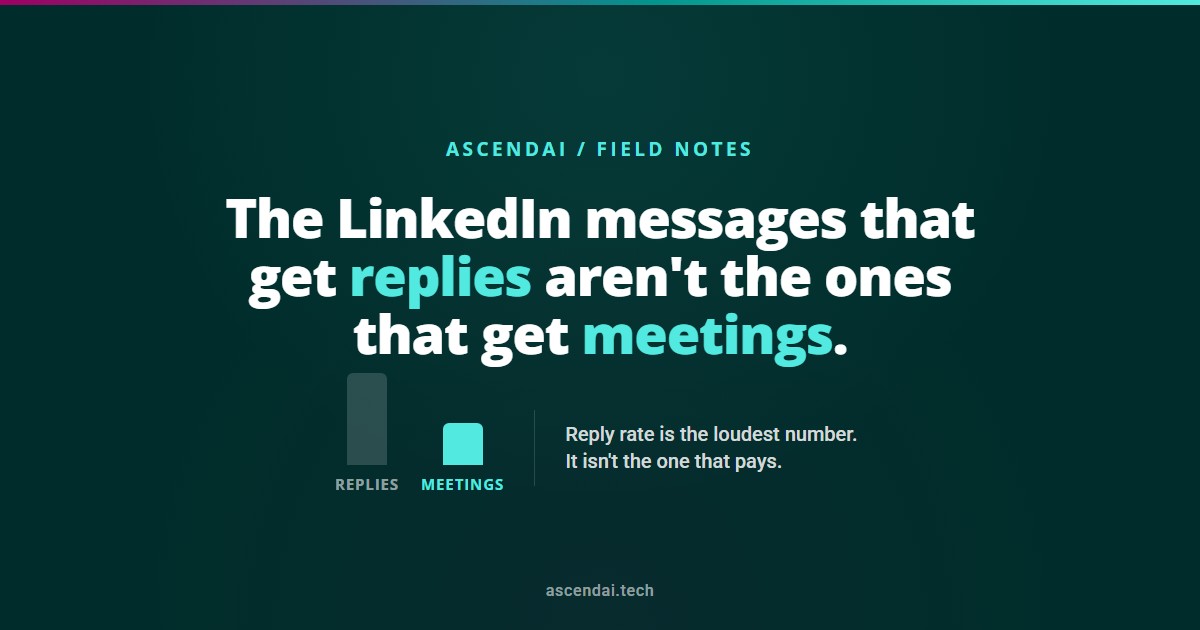
- Reply rate is the loudest number, but it isn't the one that pays. One of our quietest campaigns was one of our best.
- One specific observation roughly doubled reply rate, one genuine question beat none, and a single follow-up revived conversations that looked dead.
When I talk to firms about their LinkedIn outreach, the first number they mention is nearly always the reply rate. It's the obvious one to watch, and when replies come in it feels like the thing is working.
We've been sitting on a lot of our own outreach data, so a few weeks ago we did something I'd recommend to anyone running outbound. We went back through more than 3,400 of our own LinkedIn messages - the first messages, the follow-ups, and the replies they earned - and tracked every conversation through to the only outcome that pays, which is a meeting in the diary.
It's worth being honest about one thing before I go on. This is our own data from our own campaigns, so it tells us what tends to happen rather than proving cause and effect. But the patterns held up across enough messages that we've changed how we write because of them.
Why the reply is not the prize
The finding that surprised us most was this. The messages that pulled in the most replies were often not the messages that produced meetings. They were different messages, and the place they split apart was the ask at the end.
A soft, polite close - the kind that offers to share something "if it's useful" - reliably gets replies. People are polite, so they say yes, thanks, send it over. But when we followed those conversations through, a large share of them never went anywhere near a meeting.
A clearer, more confident close got fewer replies overall. The difference was that a much higher share of the replies it did get turned into a real conversation on the calendar.
So if you judge your outreach on replies, you can quietly train yourself to write the weaker message. The inbox gets busier and the diary doesn't, and it's very easy not to notice. It's the same reason generic, templated outbound stopped working - the metric that looks like progress isn't always the one that matters.
The quiet campaign that was actually winning
The same thing showed up from the other direction.
One of our campaigns had a reply rate that looked poor on paper, and if we'd judged it on that number alone we'd have rewritten it or shut it down. But when we followed its replies through, almost three quarters of them turned into meeting conversations. It was one of the best-performing campaigns we run. It just wasn't a noisy one.
That's the trouble with reply rate. It's the loudest number, and it isn't the one that pays.
What actually moves the needle in cold outreach?
We're keeping the full detail of what we changed for our clients, but a few of the findings are simple enough, and held up strongly enough, that they're worth passing on.
- One specific, verifiable observation roughly doubled the reply rate. One true thing about the person's actual business that shows you've genuinely looked. Simply dropping their company name into an otherwise generic message did nothing at all.
- One genuine question outperformed none. A second question added nothing. It just made the message heavier.
- The follow-up earns its keep. A short second message a few days after silence revived a meaningful share of conversations that looked dead. Most people never send it.
None of this is clever, and that's rather the point. It's what's left when you stop trying to be slick and write like someone who has actually read the other person's profile.
Why this matters if you sell a high-trust service
If your buyers are senior - and in advisory, structuring, risk, and similar fields they almost always are - they've seen every template going. You won't win them with volume, and you won't win them with polish. It's the same reason LinkedIn works for professional services firms only when it's run as a proper channel rather than a numbers game.
You win them the same way you would in a room. Open with something relevant and specific, ask one honest question, and invite the conversation with confidence rather than hope. Then follow up once when they go quiet, without taking it personally, because most of the time the silence is about their week and not your message.
The bottom line
Replies feel like the goal, but they aren't. The meeting is the goal, and the message built to get one often looks quieter than the message built to get a friendly reply.
So measure all the way through. Track conversations to the calendar, not to the "thanks, interesting" that dies in the inbox. Be specific, ask one real question, close with confidence, and follow up once. That's most of it.
Want an honest read on your own outreach? We'll look at whether your LinkedIn messages are built to get replies or built to get meetings, and show you where the conversations are leaking out before the calendar.
Book a free outreach review →Frequently asked questions
Why do my LinkedIn messages get replies but no meetings?
Usually because of the ask at the end. A soft, polite close - offering to share something "if it's useful" - reliably gets replies, but a large share of those replies never turn into a meeting. A clearer, more confident invitation gets fewer replies overall, yet a much higher proportion of them become real conversations on the calendar. If you optimise for replies you can end up writing the weaker message without noticing.
Is reply rate a good measure of cold outreach?
On its own, no. Reply rate is the loudest number but not the one that pays. In our own data a campaign with a low reply rate turned almost three quarters of its replies into meeting conversations and was one of our best performers. Judging it on reply rate alone would have led us to shut down our strongest campaign. Track conversations all the way to a booked meeting instead.
How do you get more meetings from LinkedIn outreach?
Open with one specific, verifiable observation about the person's actual business - it roughly doubled reply rate in our data, where a generic company-name mention did nothing. Ask exactly one genuine question, not none and not several. Close by inviting the conversation with confidence rather than hope. Then send one short follow-up a few days after silence, which revives a meaningful share of conversations that looked dead.

Sean Winter
Sean is a CFA charterholder with 20+ years in finance and professional services. He founded AscendAI to turn executive LinkedIn profiles into a predictable pipeline of C-suite meetings for professional and financial services firms across EMEA.